English
 عربى
عربى
 Español
News

Content
Feet dangling above the floor or knees pressed up higher than the hips isn't just an awkward look — it changes how weight moves through the lower back with every hour spent sitting. OSHA's guidance on computer workstation chairs is specific on this point: the seat is set correctly when the entire sole of the foot can rest flat on the floor with the back of the knee sitting slightly higher than the seat pan.
A chair that sits too low forces the shoulders up toward the desk to compensate, which drags the neck and upper back out of a neutral position. Over a full workday, that small mismatch compounds into the kind of stiffness that no amount of stretching fully undoes. Fixing the height is almost always cheaper and faster than treating the symptoms it causes.
The good news is that most chairs have more headroom for adjustment than people realize, and the fixes range from free to a modest parts purchase.
Before touching any hardware, rule out the obvious. The height lever sits beneath the seat, usually on the right side, and lifts a valve on the gas cylinder when pulled. Sit in the chair, pull the lever, and shift your weight slightly forward — the seat's own gas pressure does the rest of the lifting, so there's no need to push down or stand up to force it.
If pulling the lever does nothing, two things are usually to blame: the cylinder has lost gas pressure over years of use, or something in the tilt mechanism underneath is jammed. A quick way to check is to remove the seat momentarily and look for visible damage or debris around the mechanism. If the lever moves freely but the seat doesn't respond at all, that's the clearest sign the cylinder itself needs replacing rather than adjusting.

When the built-in range simply doesn't go high enough, swapping in a taller gas cylinder is the most durable fix — it's the same mechanism, just with more travel. Replacement cylinders commonly add 4 to 6 inches over a standard part, and the process is more approachable than it sounds.
Flip the chair upside down or set it on a table at its current maximum height. Press down on the collar at the base of the cylinder to separate it from the wheelbase, then do the same at the top to free it from the tilt mechanism. Fit the new cylinder into both ends the same way the old one sat, and turn the chair upright to test the range before tightening anything back down.
The one detail that trips people up: match the cylinder's diameter and taper to the original. A mismatched taper won't seat properly in the base plate, and the chair may refuse to hold its adjusted height at all.
Standard chair casters run about 2 to 2.5 inches in diameter. Moving up to 3 or 4-inch wheels adds roughly 1 to 2 inches of height on top of whatever the gas lift already provides, and the swap itself takes minutes since most casters simply pull out of the base and press back in.
The wheel material matters as much as the size here. Getting it backwards is a common mistake — chair caster types and how to match them to your floor covers the difference between hard and soft wheel compounds, which determines whether the new casters glide smoothly or end up scuffing hardwood and tile.
Beyond the height gain, larger casters also roll with less resistance, since more wheel surface distributes the chair's weight across the floor.
For a boost of 1 to 3 inches with zero tools involved, a seat cushion is the fastest option on this list. A dense memory foam or gel-infused cushion around 2 to 2.5 inches thick typically compresses to about a 1.5 to 2-inch lift once body weight settles onto it, so it's worth sizing the cushion a bit taller than the exact gap you're trying to close.
Cushions work best as a bridge solution — useful while waiting on a cylinder replacement, or for anyone who only needs a small, easily reversible adjustment. They won't match the stability of a mechanical fix, and a very thick cushion can start to compress unevenly under prolonged use, so this method suits smaller height gaps better than large ones.
Sometimes the chair isn't the issue at all — the desk sits high enough that raising the seat to match would push the knees uncomfortably close to the desk's underside. In that case, a footrest solves the ergonomic problem without touching the chair.
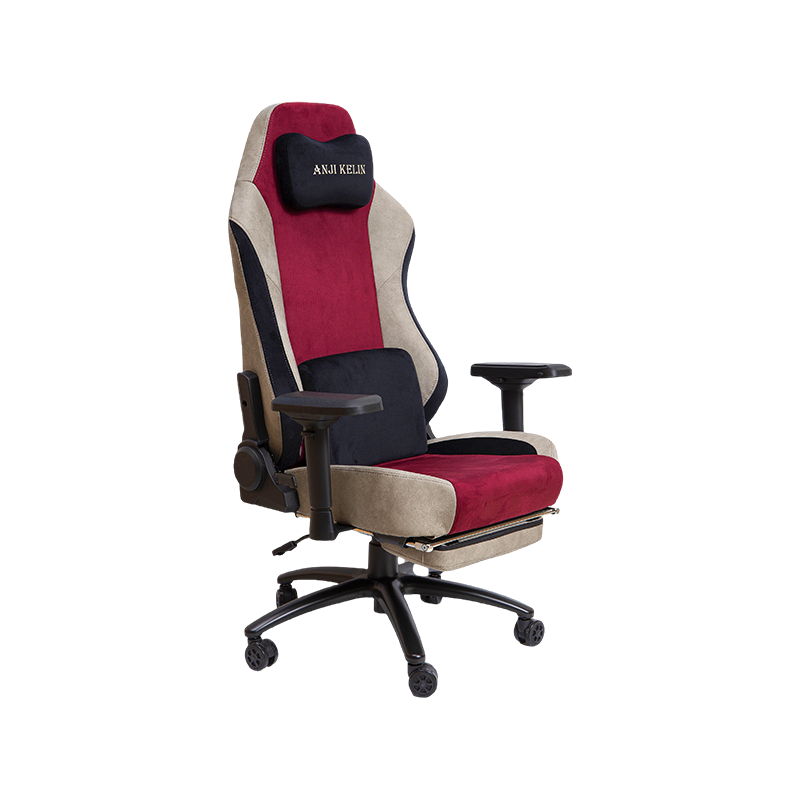
Raising the seat until the desk and elbow heights line up, then supporting the feet with a footrest instead of leaving them to dangle, keeps the same knee-and-hip alignment OSHA's guidance calls for. Some chairs simplify this by building the footrest directly into the design — an office chair with an adjustable footrest built in removes the need for a separate accessory entirely, which keeps the desk area less cluttered.
If a chair is maxed out on its cylinder, oversized casters, and a cushion, and it's still not tall enough, the mechanism has simply reached the limit of what it was engineered for. At that point, replacing the chair with one built for a wider height range solves the problem permanently instead of layering fixes on top of each other.
A mesh office chair with an extended gas lift range is worth a look here, since a stronger cylinder built into the chair from the start typically covers a wider seat height span than a standard replacement part can match. For a broader comparison across materials and features, the full range of adjustable office chairs makes it easier to line up height range against other priorities like breathability or lumbar support.
Once the right chair is in place, small habits keep it working for you — practical tips for getting more everyday comfort out of a mesh office chair covers the adjustments most people skip after the initial setup.
Chairs
Gaming Chair Office Chair High-end Luxury Gaming Chair Regular Gaming Chair Mesh Office Chair PU Leather Office Chair Fabric Office ChairContact Us