English
 عربى
عربى
 Español
News

Content
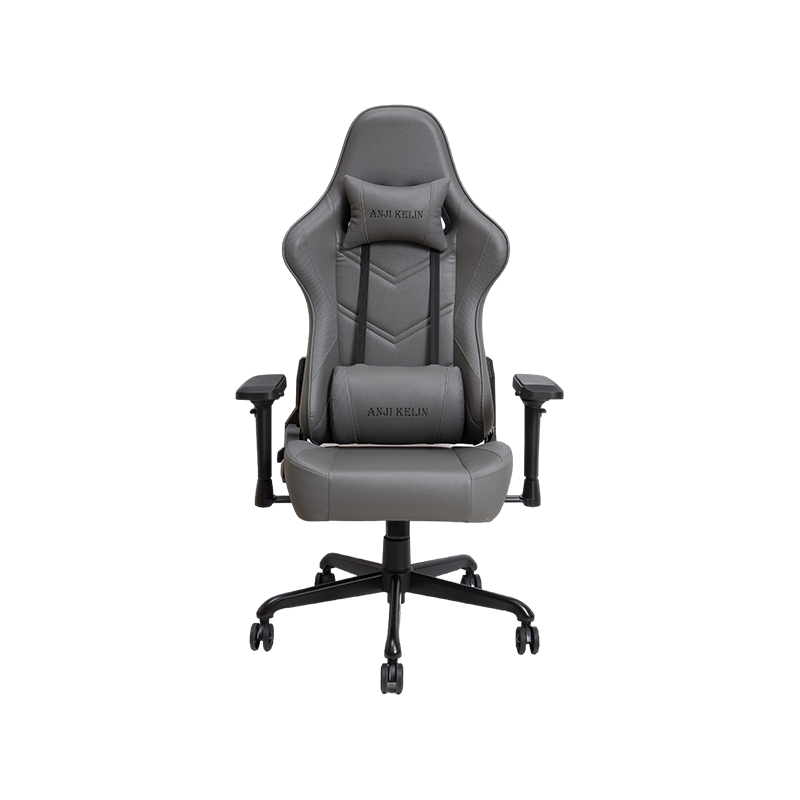
Walk into any modern office, co-working space, or home studio today and you will almost certainly find grey seating. The shift has been gradual but unmistakable—black dominated office chairs for decades, yet grey PU leather has quietly displaced it as the most specified color across commercial and residential furniture alike.
The reason is not trend-chasing. Grey occupies a precise perceptual middle ground that no other color matches in a work environment. It reads as professional without feeling cold. It is neutral without being boring. Against white desks, light wood surfaces, or darker industrial finishes, grey sits without competing—it recedes where it needs to and anchors where it should. For people who spend eight or more hours daily in a chair, that visual quietness is a genuine quality-of-life factor. A chair that does not demand attention allows the work to take it instead.
There is also a practical dimension to the color choice that often goes unacknowledged: grey PU leather hides a specific category of everyday marks—minor scuffs, handling smudges, and the faint impressions left by fabric clothing—far more effectively than black. Black surfaces reveal every fingerprint and every patch of visible lint. Grey absorbs these visually, keeping the chair looking composed with far less frequent wiping.
PU leather—polyurethane leather—is a synthetic upholstery material constructed from a woven or non-woven fabric base coated with one or more layers of polyurethane polymer. The coating is what gives PU leather its smooth, leather-like surface texture, its resistance to liquid penetration, and its characteristic appearance. The base layer provides structural integrity and prevents the coating from tearing under tensile stress.
For chairs used across full working days, PU leather offers a combination of properties that genuine leather and fabric alternatives cannot simultaneously match. Its non-porous surface wipes clean in seconds—a spilled coffee, a pen mark, or a transfer from dark clothing requires only a damp cloth rather than specialist cleaning products. This matters in shared office environments and in any household with children. Genuine leather requires periodic conditioning to prevent cracking; PU leather does not, which reduces ongoing maintenance effort significantly.
Cost is the other factor. High-quality PU leather chairs deliver a polished, professional appearance at a fraction of the price of genuine leather equivalents. For B2B buyers furnishing multiple workstations—or for individual buyers who want the executive chair aesthetic without the executive chair budget—this gap in cost-per-seat is decisive. For an extended comparison of how PU leather performs against fabric alternatives across different use conditions, the analysis in how fabric and leather gaming chairs compare for extended sessions covers the tradeoffs in practical detail.
The trade-off worth acknowledging honestly: PU leather's polyurethane coating degrades over time. Under heavy daily use, most standard-grade PU leather chairs show early delamination or surface flaking between two and five years. Higher-grade PU formulations—thicker coatings, more durable base layers—extend this significantly. The quality of the PU coating matters more than the color choice, which is why understanding what to look for in a specification is as important as selecting the right shade.
The choice between grey and black PU leather is the most common decision buyers face, and it deserves a clear-eyed comparison rather than a purely aesthetic answer. Each color has genuine practical implications that differ by use environment.
| Grey vs. black PU leather — practical comparison across key criteria | ||
| Criterion | Grey PU Leather | Black PU Leather |
| Fingerprint visibility | Low — blends into surface tone | High — shows clearly, especially in direct light |
| Lint and fabric transfer | Low — absorbed visually | High — especially from light-colored clothing |
| Light stain visibility | Moderate — pale liquids may leave rings | Low — most light stains invisible on dark surface |
| Heat absorption | Lower — reflects more ambient light | Higher — absorbs heat in direct sunlight |
| Interior style range | Wide — suits light, dark, and mixed palettes | Narrower — dominant in darker or monochrome schemes |
| Long-term appearance | Wear marks less visible on mid-tones | Wear and surface cracking more visible with age |
The heat absorption difference is worth particular attention for home office users whose chair receives afternoon sunlight. Black PU leather can become noticeably warm to sit on in a sun-exposed room, while grey surfaces run cooler at the same ambient temperature. For office environments without direct sunlight, this distinction disappears. For anyone considering a breathable mesh office chair as an alternative seating option, mesh eliminates surface temperature concerns entirely—though it sacrifices the aesthetic profile that PU leather provides.

Grey has a structural role in interior design that goes beyond personal preference. In color theory, grey functions as a visual anchor—it stabilizes compositions that contain stronger hues and allows accent colors to read more clearly. In a workspace context, this means a grey PU leather chair becomes the visual baseline against which monitor bezels, desk accessories, and wall art are read. It is almost impossible to clash with.
For Scandinavian and Nordic-influenced interiors—light oak, white walls, minimal ornamentation—grey PU leather is essentially the correct answer. It extends the palette without introducing contrast. For industrial and urban-inspired spaces with exposed concrete, metal shelving, and dark wood, mid-to-dark grey leather ties the scheme together in a way that black often overwhelms. For more traditional or transitional office settings with warmer tones, a warm grey (one with slight beige undertones rather than a cool blue-grey) bridges between the modern chair form and the conventional environment.
In gaming chair design, grey has become the preferred color for setups built around monitor-heavy battlestations where the visual field is already saturated with RGB lighting and screen content. Against that backdrop, a grey chair sits quietly. It supports the setup rather than competing with it—a deliberate compositional choice that experienced builders increasingly favor over the high-contrast red-and-black color schemes that defined gaming chairs in their earlier market phase.
For B2B procurement managers furnishing shared office environments, grey also addresses the practical issue of demographic neutrality. It reads as equally appropriate to a broad range of occupants across ages, roles, and aesthetic preferences—a relevant consideration when a single chair specification needs to work across an entire floor.
Grey PU leather has specific maintenance characteristics that differ from black in ways that most care guides overlook. Understanding them upfront prevents the surface marks that cause grey chairs to look prematurely tired.
The primary grey-specific concern is pale stain edge marking. When a light-colored liquid—diluted coffee, tea, water with dissolved minerals—dries on a grey PU surface, it can leave a faint ring at the dried edge. On a black surface, this is effectively invisible. On grey, especially mid-tones, it is legible. The prevention is simple: wipe liquid spills immediately rather than allowing them to dry. A clean, slightly damp microfiber cloth removes fresh spills without residue. Avoid paper towels, which can leave micro-scratches on the polyurethane surface over time.
Routine cleaning for grey PU leather should happen more frequently than most users perform it—every one to two weeks for chairs in daily use, rather than only when visible marks appear. A mild soap solution (a few drops of dish soap in warm water) applied with a microfiber cloth and wiped dry is sufficient. Avoid alcohol-based cleaners, acetone, and abrasive pads. Alcohol strips the plasticizers that keep the polyurethane coating flexible, accelerating the cracking and peeling that eventually affects all PU leather. For a comprehensive protocol covering moisture exposure, stain removal, and surface conditioning across all PU leather chair types, the full complete guide to PU leather care and cleaning for office chairs covers each scenario in step-by-step detail.
One additional note for grey chairs in home environments: denim and dark indigo fabrics can transfer dye onto light-to-mid grey PU surfaces, especially in warm conditions where the fabric is pressed against the chair surface. This is more common in summer months. A light wipe after long sessions in dark jeans removes the transfer before it sets. Once set—particularly after 24 hours or more—dye transfer on grey PU can be difficult to fully remove without a dedicated PU-safe stain remover.
Grey is a color choice, but chair quality is determined by construction decisions that have nothing to do with upholstery shade. These are the specifications that separate chairs that look identical on a product page but perform very differently over three years of daily use.
PU coating weight and thickness. Thicker polyurethane coatings resist delamination longer. Unfortunately, coating thickness is rarely listed in consumer-facing specifications. Proxy indicators: chairs with a warranty of three years or more on the upholstery, and chairs from manufacturers who publish material composition data, tend to use higher-grade PU. Be cautious of chairs listed at very low price points that describe the upholstery only as "PU leather" without further specification.
Foam density and seat construction. The seat cushion determines comfort during extended sitting far more than the upholstery material. High-density foam (45 kg/m³ or above) maintains its shape under daily compression and distributes weight evenly across the seat pan. Lower-density foam compresses quickly, creating the "bottoming out" sensation that causes pressure points and discomfort in sessions longer than two hours. A chair with excellent PU leather but inadequate foam is a poor long-term choice regardless of its appearance.
Base and gas cylinder quality. The five-star base should be aluminum or high-grade nylon rated for the intended user weight. Steel cylinders meet BIFMA X5.1 performance standards for general-purpose office chairs, the North American benchmark for commercial seating durability and safety. European equivalent EN1335 covers similar structural and ergonomic requirements. Chairs that reference either standard have undergone third-party load, fatigue, and stability testing—a meaningful quality signal when comparing manufacturers.
Ergonomic adjustability. A grey PU leather chair that looks correct in a product photograph but lacks adjustable lumbar support, seat height range, or armrest positioning will not serve an eight-hour day well regardless of its aesthetic qualities. The upholstery color is the last specification to evaluate—confirm the ergonomic framework is appropriate for the user's body dimensions first.
The grey PU leather office chairs built for full-day comfort that earn their price are those where material quality, foam construction, and ergonomic adjustability are specified together—not chairs where a premium surface material is placed over a compromised structural foundation. Grey PU leather at its best is a combination of considered aesthetics and honest engineering, and the two belong together.
Chairs
Gaming Chair Office Chair High-end Luxury Gaming Chair Regular Gaming Chair Mesh Office Chair PU Leather Office Chair Fabric Office ChairContact Us