English
 عربى
عربى
 Español
News

Content
An ergonomic chair is a seating solution engineered to support the human body's natural posture, alignment, and movement during extended periods of sitting. Unlike conventional office chairs, which are built around a fixed, generic shape, an ergonomic chair is defined by its ability to adapt to the individual user—adjusting to different body dimensions, sitting habits, and task requirements.
The term itself comes from two Greek roots: ergon, meaning work, and nomos, meaning laws or principles. Ergonomics, therefore, is the science of designing tools and environments to suit human capabilities. When this science is applied to seating, the result is a chair that works with your body rather than forcing your body to accommodate a rigid structure.
In practical terms, the distinction between an ergonomic chair and a standard office chair is straightforward: a standard chair offers a fixed seat height, a stationary backrest, and little to no lumbar support. An ergonomic chair provides a system of adjustable components—seat height, lumbar support, armrests, backrest angle, and seat depth—that together allow the chair to be precisely configured to each user's unique anatomy and workspace.
Understanding what makes a chair truly ergonomic requires a basic grasp of how the human body responds to prolonged sitting. When a person sits without proper support, the spine deviates from its natural "S" shape. The lumbar region flattens or curves inward excessively, placing uneven pressure on intervertebral discs and straining the surrounding musculature. Over time, this leads to chronic lower back pain, neck stiffness, and circulatory restriction in the legs.
Ergonomic seating science, drawing from anatomy, biomechanics, and occupational health research, establishes a concept called neutral posture—the body's most structurally balanced position. In neutral posture:
A properly configured ergonomic chair facilitates and sustains this neutral posture throughout a workday, reducing cumulative physical stress on the musculoskeletal system.

An ergonomic chair is not defined by any single element—it is the combination of multiple adjustable components that distinguishes a genuine ergonomic design from a conventional seat. Here are the essential features that set these chairs apart:
The seat should be height-adjustable, typically ranging from 16 to 21 inches from the floor, to accommodate users of varying stature. This ensures the feet rest flat on the floor and the knees align at a 90-degree angle, distributing body weight evenly and reducing lower back strain.
This is the most critical component of any ergonomic chair. The lumbar region of the spine naturally curves inward, and a chair that fails to support this curve causes the lower back to flatten and slump. Adjustable lumbar support—positioned correctly at around 5.5 to 7.5 inches above the seat depending on the user's height—preserves this curvature and is the primary mechanism through which an ergonomic chair prevents back pain.
The seat pan must be deep enough to support the thighs without pressing against the back of the knees. The ideal seat depth leaves 2–4 inches of clearance between the front edge of the seat and the back of the knees. This prevents circulation restriction and reduces pressure on the lower legs.
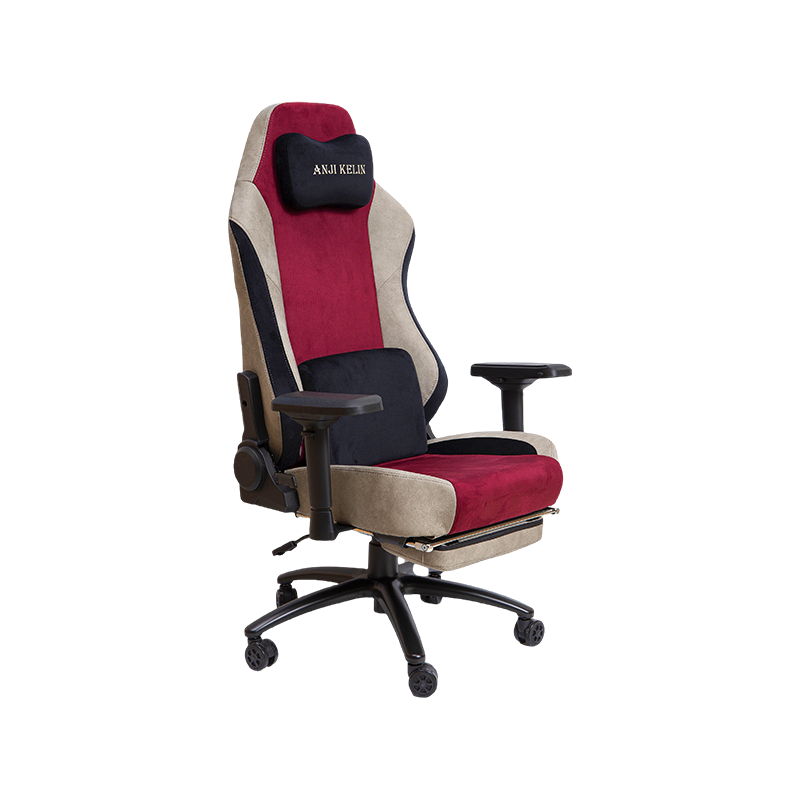
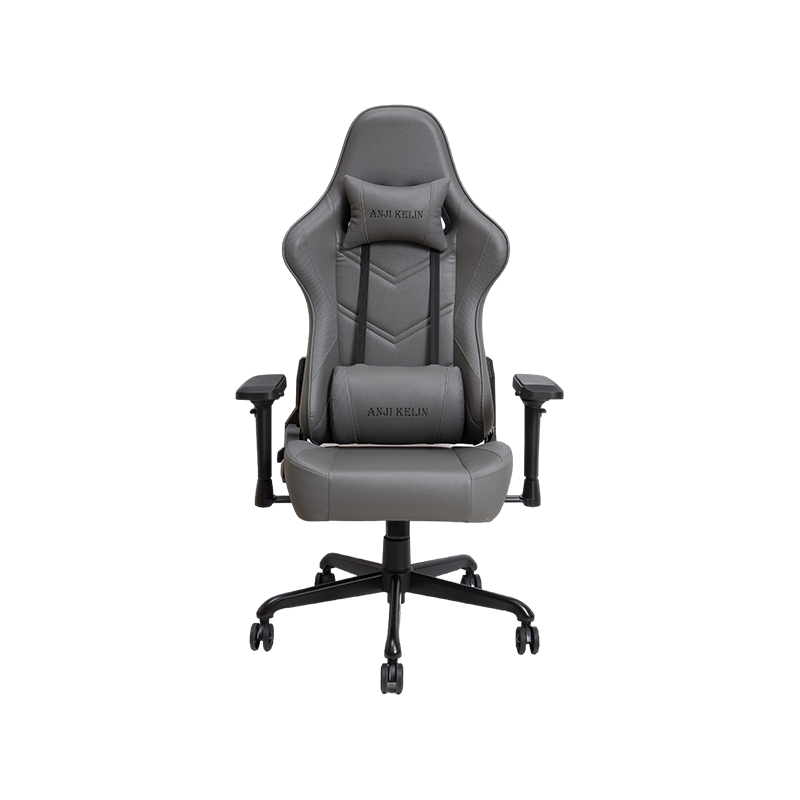
Static sitting—remaining locked in one position for hours—is a significant driver of fatigue. A reclining backrest that supports postures between 100° and 120° significantly reduces lumbar, thoracic, and cervical muscle activity. Tilt tension and synchro-tilt mechanisms allow small, continuous movement that redistributes pressure and keeps muscles active. This dynamic support is one of the defining characteristics of a true ergonomic design, featured prominently in our gaming chairs, which combine full-back recline with multi-directional armrest adjustment for extended seated use.
Armrests reduce tension in the shoulders and upper back by allowing the arms to rest at a comfortable height without hunching. High-quality ergonomic chairs feature 4D armrests—adjustable in height, width, depth, and pivot angle—ensuring the arms remain relaxed regardless of the task.
An optional but valuable feature, particularly for users who spend time on calls or in reclined positions. A well-positioned headrest supports the cervical spine and reduces tension in the neck and upper shoulders.
Material choice affects long-term comfort significantly. Mesh upholstery—such as that used in our mesh office chairs—allows consistent airflow, preventing heat buildup during extended sitting. A five-point star base with appropriate casters provides stability and smooth mobility without requiring awkward body twisting to reach different areas of a workstation.
The case for ergonomic seating is well-supported by occupational health research. A 2024 study published in BMC Musculoskeletal Disorders found that workers using properly adjustable chairs experienced 27% less lumbar pain and a 15% improvement in measurable productivity compared to those in standard seating. These findings are consistent with broader research from university and workplace ergonomics programs, which consistently link spinal alignment support with reduced fatigue and improved concentration.
The benefits extend across several dimensions:
Not every chair marketed as "ergonomic" meets a rigorous definition of the term. Leading bodies such as BIFMA (Business and Institutional Furniture Manufacturers Association) and international standards organizations have established testing protocols that define minimum performance requirements for adjustability, structural durability, and stability.
The key certifications to look for when evaluating an ergonomic chair include:
| Standard | Region | What It Verifies |
| BIFMA 5.1 | USA | Structural strength, stability, durability, and adjustability of office seating components |
| EN 1335 | Europe | Seat dimensions, adjustment ranges, backrest support, and overall safety for office chairs |
| SGS Testing | International | Third-party material safety, mechanical performance, and chemical compliance |
Compliance with these standards is an important signal that a chair has been manufactured to a verified specification rather than simply styled to look ergonomic. Chairs that meet BIFMA 5.1 and EN 1335 have undergone rigorous load, fatigue, and stability testing—providing buyers with documented assurance of long-term performance.
Beyond certification, the broadest practical definition of an ergonomic chair, as established by OSHA guidelines and human factors research, requires at minimum three adjustable features: adjustable lumbar support, adjustable armrests, and a reclining backrest. Any chair that lacks these three elements falls outside the functional definition of ergonomic seating, regardless of how it is marketed.
Selecting an ergonomic chair is not a one-size-fits-all decision. The right chair depends on the user's body dimensions, the nature of their work, the hours spent sitting each day, and the type of environment—corporate office, home workstation, or gaming setup.
Key questions to consider before purchasing include:
Whether you are outfitting a single workstation or sourcing chairs at scale for a corporate or retail client, beginning with a clear understanding of the ergonomic chair definition—and the engineering principles behind it—is the most reliable path to a well-informed decision. Explore our full chair collection to find certified ergonomic seating designed for every application, from professional office environments to high-performance gaming setups.
Chairs
Gaming Chair Office Chair High-end Luxury Gaming Chair Regular Gaming Chair Mesh Office Chair PU Leather Office Chair Fabric Office ChairContact Us