English
 عربى
عربى
 Español
News

The base of a chair does more than hold it off the floor. It determines how the chair moves, how long it lasts, and whether it stays safe under daily load over thousands of hours of use. Yet in most buying decisions — for office environments, gaming setups, and commercial furniture alike — the base rarely gets the scrutiny it deserves. That oversight is exactly where chairs fail first.
This guide covers what a chair base actually does, the main types available, the materials used in quality manufacturing, and the performance standards that separate reliable bases from cheap ones. Whether you're specifying chairs for a corporate office or sourcing for OEM furniture production, the base is where that evaluation should start.
Content
A chair base is the structural foundation that connects the seat and mechanism assembly to the floor. In a swivel chair — whether an ergonomic office task chair or a gaming chair — the base also integrates with the gas cylinder to enable height adjustment and with the casters to enable movement across surfaces.
Three functional demands drive base design: load capacity, stability, and movement quality. Load capacity is the most straightforward — the base must handle the static weight of the user plus the dynamic forces generated by sitting down, leaning back, and repositioning. Stability depends on the geometry of the leg spread: a wider base radius reduces tip-over risk, particularly when a user leans to one side. Movement quality is determined by the fit between the base's caster sockets, the caster wheel type, and the floor surface.
A base that fails any of these criteria creates a safety risk that compounds over time. Micro-fractures in a cast base develop under repeated load cycles. Loose caster sockets cause wobble. An undersized radius makes the chair prone to tipping under lateral lean. These are not aesthetic issues — they are engineering ones, and they're why internationally recognized test standards exist specifically to evaluate chair base performance.
The geometry and leg count of a chair base directly affects its stability profile and suitable applications. Four configurations dominate the commercial furniture market.
| Common chair base types and their primary performance characteristics | |||
| Base Type | Typical Leg Count | Stability Profile | Primary Application |
| Five-Star Base | 5 arms | Highest — optimal load distribution | Office chairs, ergonomic task chairs, gaming chairs |
| Four-Star / Four-Leg Base | 4 arms | Good — widely used in dining and lounge | Dining chairs, lounge chairs, accent chairs |
| Round / Disc Base | Continuous ring | Moderate — low profile, style-driven | Salon chairs, decorative swivel chairs |
| Sled / Fixed Base | 2 continuous runners | High — no mobility, no tipping risk | Conference side chairs, guest seating |
The five-star base is the standard in task seating for a specific reason: five evenly spaced arms distribute both static and dynamic load more uniformly than four, and the wider effective footprint — typically 60 to 70 cm in diameter for office chairs — provides a stable base even when a user leans sharply. The four-star base sees wider use in dining and lounge applications where the chair does not swivel under occupant load.
For gaming chairs designed for extended-session performance, the five-star base is universal, since reclining and lateral movement during use create asymmetric loads that require maximum tip-over resistance.
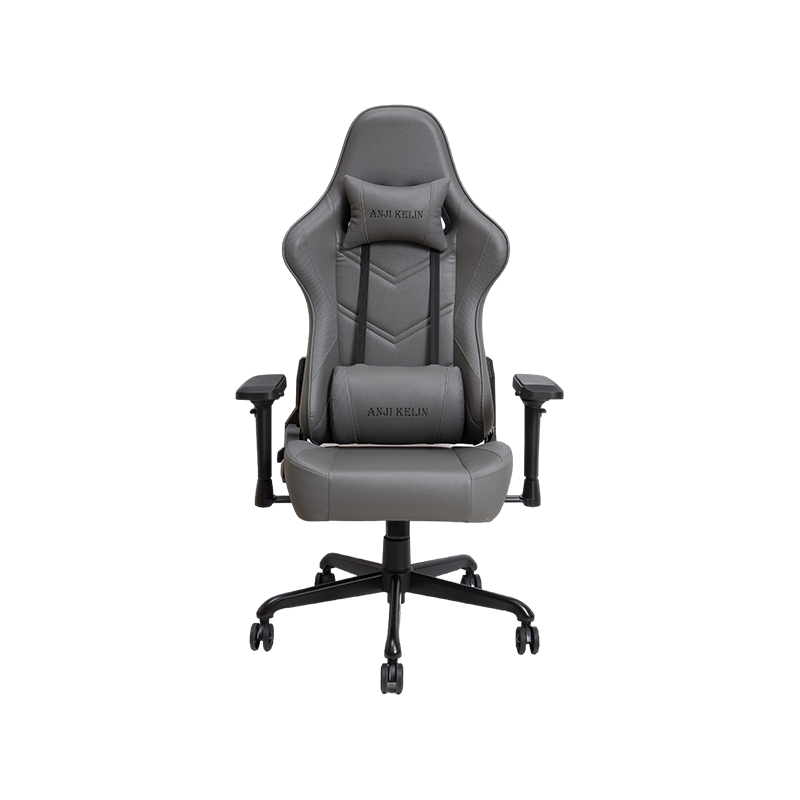
The material of the base affects weight, load rating, corrosion resistance, aesthetics, and cost. Three materials account for the overwhelming majority of commercial chair bases.
Surface treatment options — raw polished, fine polished, black powder coat, or custom color — are generally available across aluminum and steel bases. For mesh office chairs in contemporary workspace environments, a black or silver powder-coated aluminum base is the most common specification, balancing cost, durability, and design neutrality.
Chair base performance is not a matter of manufacturer claims — it is a matter of standardized test results. Two frameworks dominate the global commercial furniture market, and understanding them helps buyers distinguish genuinely tested products from those that merely claim compliance.
ANSI/BIFMA X5.1 is the primary North American standard for general-purpose office chairs, developed by the Business and Institutional Furniture Manufacturers Association. The standard covers 20 individual tests designed to simulate years of commercial use, including base and caster strength tests, stability assessments under lateral and forward load, and drop tests that replicate the impact of a user sitting down hard. Chairs that meet BIFMA X5.1 are rated for users up to 275 lbs (125 kg), representing the 95th percentile male. For environments with heavier users, BIFMA X5.11 applies. The full overview of BIFMA furniture safety and performance standards is maintained by the organization and updated regularly.
EN 1335 is the European equivalent, mandatory for workplace compliance across EU member states. It classifies chairs into types (A, B, C) based on adjustability range and applies structural testing requirements that include base strength under static and dynamic load. For export-oriented manufacturers supplying European markets, EN 1335 certification from an independent accredited laboratory is a procurement requirement, not an optional credential.
Buyers sourcing chairs for commercial use — particularly for resale or fleet procurement — should request actual test reports rather than accepting certification claims at face value. The report should identify the testing laboratory, the specific tests passed, and the date of the most recent test cycle.
When specifying or replacing a chair base, three dimensions determine compatibility and performance.
The base diameter — measured tip to tip across the star — directly affects stability. Standard commercial office chair bases range from 60 to 70 cm in diameter. A 65 cm base is the most common commercial specification; bases below 60 cm reduce the tip-over safety margin and are generally limited to lighter-duty applications. Larger-diameter bases (70 cm and above) are used in heavy-duty or large-occupant seating.
The center bore accepts the gas lift cylinder. The standard commercial bore is 50 mm (2 inches) tapered, which accepts the industry-standard 50 mm gas cylinder used across the majority of office and gaming chairs. This standardization means gas cylinders and bases are broadly interchangeable, simplifying replacement and repair. Non-standard bore sizes exist in proprietary chair designs and should be verified before ordering replacement components.
The caster socket size — typically 7/16 inch × 1 inch (11 mm × 25 mm) — is the other near-universal standard in commercial seating. This socket accepts both standard rolling casters and glide caps, allowing the same base to be used on hard floors (with soft-wheel casters) or carpet (with hard-wheel casters), and converted to a stationary glide where mobility is not required.
For PU leather office chairs with full 360-degree swivel function, confirming that the base diameter and cylinder bore meet these standard specifications ensures long-term parts availability and easy field service.
For procurement teams and OEM buyers, the following checklist condenses the evaluation criteria that matter most in practice.
Explore the complete chair product range to review seating specifications across gaming, office, and leisure categories, with full base and component details available on request.
Chairs
Gaming Chair Office Chair High-end Luxury Gaming Chair Regular Gaming Chair Mesh Office Chair PU Leather Office Chair Fabric Office ChairContact Us